Delaware - The First State
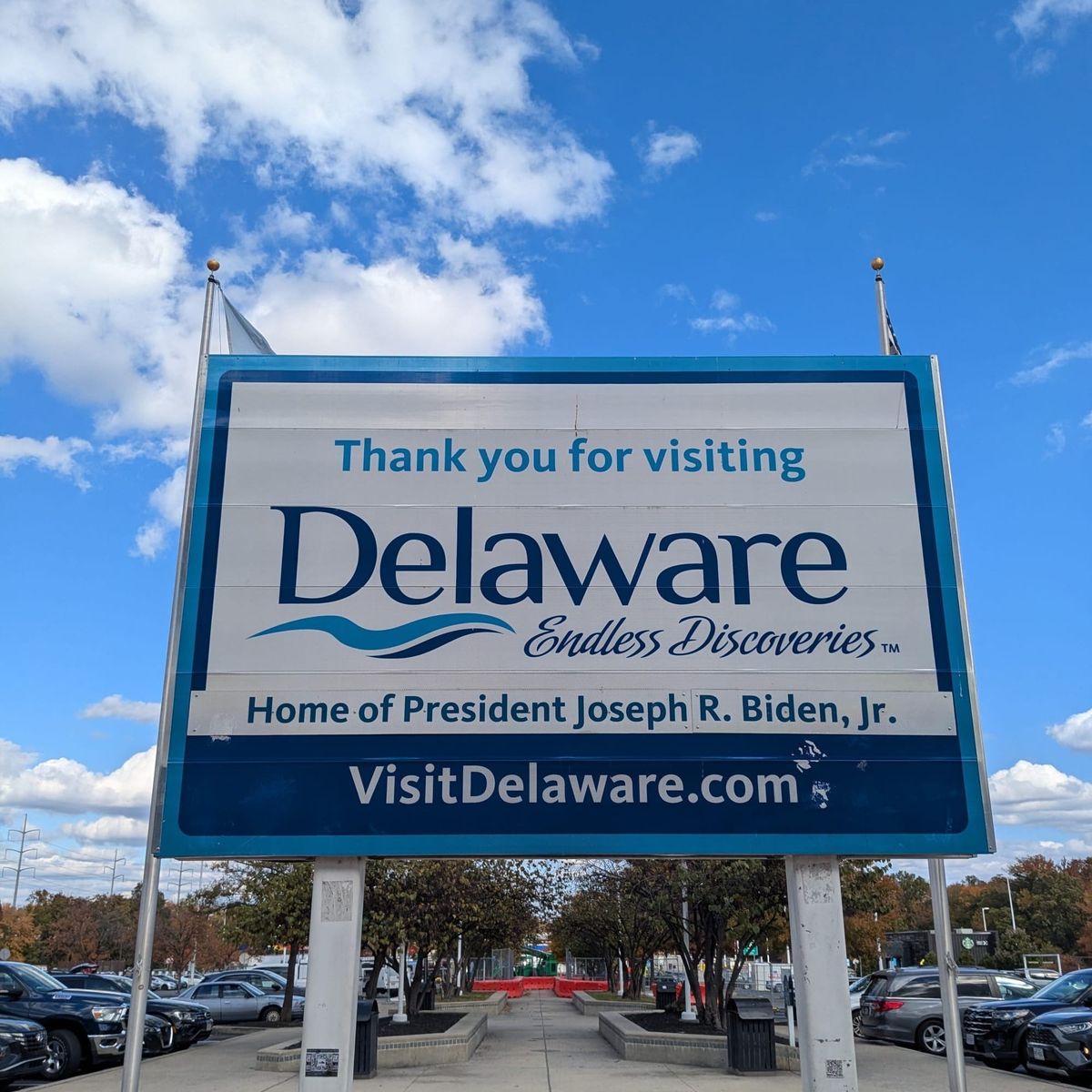
Visited: first time probably in early 2000s, also October 23, 2025, #49 for the year.
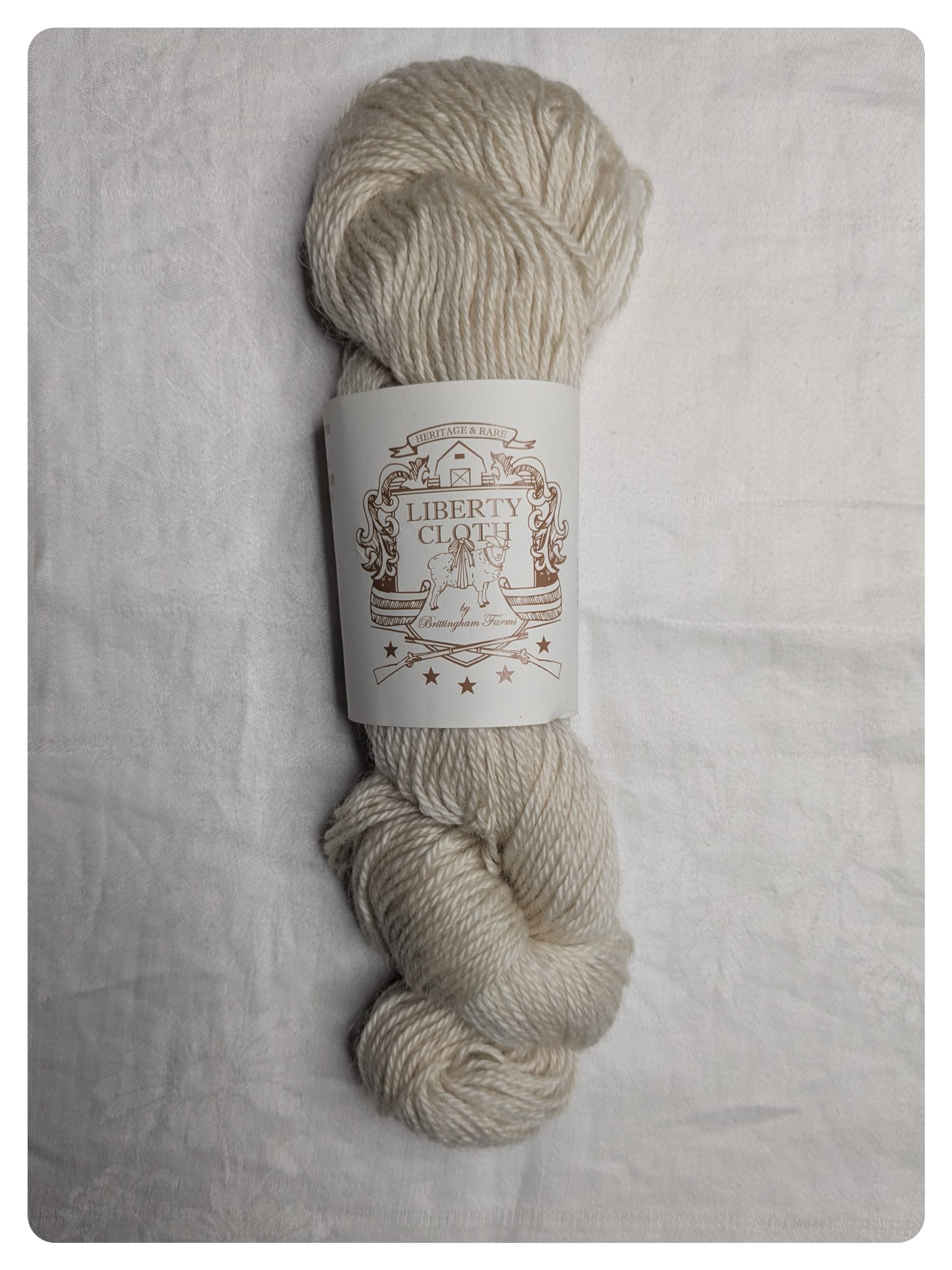
Yarn: Brittingham Liberty Cloth, undyed worsted, 100 percent wool from Leicester longwool sheep. Raised and shorn in Delaware, unclear where spun.
2020 Population: 989,950
Politics: firmly Democratic
Tax policy: no sales tax, significant revenues from corporations headquartering in Delaware
Famous People: Joe Biden, Aubrey Plaza
Senior Senator: Chris Coons
Junior Senator: Lisa Blunt Rochester
Sole Representative: Sarah McBride
I might have the only skein of Delaware yarn left.
Initially I was surprised, because driving through there seem to be lots of farms. I’d had the impression that there was a lot of agriculture too, stemming from the fact that the impacts of the late 1800s peach blight in Delaware City was an important part of my friend’s description of her hometown. Unfortunately, the state is a yarn desert. There are a few local yarn stores listed, but when I called, they didn’t even have anything dyed locally, let alone anything grown or spun in state. I looked on ravelry (a yarn-centric social media site, with one of the most extensive listings of yarns in the world), with no luck. In desperation, I started searching online for sheep and alpaca farms. That’s when I found Brittingham Farms.
Located in Southern Delaware in Millsboro, this farm had done a limited run of undyed Leicester longwool. I gather it had been a one-off fundraiser to support the conservation of their rare breed of sheep. They have one skein left, which I quickly order.
It’s called Liberty Cloth, and the label has a quote from the July 1774 Virginia Gazette: “To the Farmers of America, Increase your sheep, And raise wool, As far as possible; That you may, From this time, Wear liberty cloth. Freedom.”
In the years leading up to 1776, trade relations between the UK and the thirteen colonies had deteriorated. We all learned about the Boston Tea Party and how unfair it was to have taxation without representation in school, but there were also other restrictions like what the colonies were allowed to trade in and how it could be shipped. As a result, the colonies (Delaware included) mostly exported agricultural goods and imported manufactured goods, including cloth. Hence the call to boycott imports and use domestically produced cloth. (Irwin 2017 has a good overview of the trade issues in Colonial times.) The US is somewhat of a hypocrite on this, since we tax the District of Columbia, Puerto Rico, and other overseas territories without representation, and the Jones Act restricts shipping between US ports to only US carriers.
As the US became the dominant world economy in the 20th century, we had a thriving textile industry. Over time, production in other countries grew and we started importing more. International trade in textiles was first governed by the Multi Fibre Arrangement through 1994, then through other trade agreements. We have moved our trade balance angst from UK to China these days. Most fiber mills left in the US are very small, and specialize in small runs like the Liberty Cloth I found.
My skein is from a sheep named Brooke. The worsted weight feels silky, with a sheen that gives it an angelic halo. It’s lovely stuff, and I wish there was more of a market for it. Given the gorgeous photos of the farm staged as a wedding venue, I can guess it’s less work to rent out their barn for couples tying the knot rather than keeping it free for itinerant sheepshearers to cut through the knotted fleeces. Even though there were fewer than a million residents of Delaware as of the 2020 Census, the state has benefited from being known as the corporate capital of the world.
With around two-thirds of all Fortune 500 companies incorporated in the state, even minuscule tax or fee rates can generate billions in income. When taken together, the state is just as reliant on large corporations paying levies as it is on personal income taxes. It means that there is no sales tax, and the state has enviable infrastructure and educational system. Of course this seems like a good idea to the residents and elected officials. The cost, however, is an abiding need to keep corporations happy. They have an entire court system geared toward serving corporations called the Court of Chancery. It was a judge in that system that earned the wrath (and death threats) of Elon Musk when she rejected his pay package for being excessive. I was cheering this case on. Economics teaches that people respond to incentives, and so giving people more money should motivate them. There is a limit, though, and if those incentives for top earners means it’s a transfer form lower-income earners, what about their incentives? At the end of 2025, the Delaware Supreme Court overruled that Court of Chancery judge, allowing Musk to receive a trillion dollar pay package. Yay economics?
What economics is not good at is recognizing how more money can also undermine the trust in fairness our entire system depends on. As can be seen with Delaware’s favorite son, our 46th President of the United States Joe Biden, who was honored at the rest area I stopped in to take my official state picture.
Because I had held out hope for buying my Delaware yarn in person, I’d skipped it during the March New England loop, as well as during the Great Southern States yarn tour in May. I feel guilty I had left it so late, because people from Delaware are VERY proud of being the first state. The first person from Delaware I met, when I was in college, made it a point of educating me about the state’s crucial role in the history of our country. From Caesar Rodney, suffering from facial cancer, heroically riding through the night to ensure the colonies declared their independence in 1776, to Delaware being the first to approve the Constitution, the state is small but mighty, and mighty proud of it. Seriously, if you ask a Delawarean where they’re from, the response is always “Delaware! The First State!”
In any case, when I finally make it back to the East Coast in October, I only had time for a quick stop. Hence the rest area.
There’s plenty of parking, and a nice paved area with trees to sit under if you’re willing to brave the roar of the interstate. Inside the large covered courtyard there are clusters of tables occupied by families grabbing a bite. The air is heavy with the smell of sugary baked goods, and most of the coin-operated massage chairs are occupied with tired drivers taking a blissful break. There’s a souvenir shop selling extortionately-priced healthy snacks and ridiculous postcards that I am seriously tempted by. When I go look at the exhibit commemorating the dedication by the Bidens, I realize it was named before he was elected president. This was going to be his legacy. It seemed a little sad to name a monument to driving after him considering how much he loved taking the train back and forth to DC. But maybe the people of Delaware, like me, have some mixed feelings about the man who was their Senator for decades.
As one of the Senators from Delaware, Biden was very aware of the interests of corporations and banks. During his presidency, he pushed for loan forgiveness for student debt, but he did not push for undoing the 2005 bill that led to the ballooning debt burden in the first place.
Even though going to college has historically paid off in terms of lifetime wages, typically people fresh out of high school don’t have the maturity or perspective to weigh whether a student loan will pay off for them. The pitfalls are now well-documented: if you don’t finish, you have the debt without the degree to qualify for a higher-paying job. If you pick the wrong major, you might not get a good-paying job. If you pick the wrong school, you might not learn what you need to or get the networking support you need. If you come out of school with a massive repayment requirement, you have to take a high-paying job rather than taking a risk on a startup or public service. If you graduate into a recession, your career progression might be derailed.
But if loan companies know they can collect even if someone declares bankruptcy, they won’t have the same incentive to be careful with their loans. As long as you’re willing to sign the piece of paper, or guilt your parents or grandparents into signing, they will eventually get their money. Even if lives are ruined.
It gets worse. If universities know that students think education pays off and loan companies are offering unlimited money, what incentive do the educators have to deliver efficiently? Why not pay themselves a little more? Why not increase the prices? This makes it even less likely students will have it be worth it in the future, but it’s not their problem. In fact, it makes them seem more desirable to be able to charge such high prices. After all, there must be something of value there.
The 2005 bankruptcy changes supercharged these incentives, and led to our current student loan problems. Biden supported the bill, and declined to push Congress to reform it even after student loans became a political issue when he was president. After all, it benefits large corporations making the loans.
Everyone I have ever met from Delaware has been lovely. My friends over the years, the local yarn store employees who tried to help me, the people I met on the road. But the economy of the state is geared toward pleasing rich, globally mobile people. It’s all too easy to turn a blind eye to the bad behavior of the wealthy. This attitude of good for me, bad for everyone else isn’t sustainable. Maybe it’s because Delaware is my penultimate state of the fifty that it hits me especially hard. If they’d seen what I had, would they have a different perspective?